The Proposal in Pictures
Steering Within Limits, in six pictures
About this page
The core of the proposal in six pictures, for anyone new to it (about 6 minutes). For the reasoning behind each picture, read Start Here → (about 15 minutes). For the essentials in text, read the one-page overview →.
Decades of effort, goodwill, and new technology have not turned global emissions downward. Steering Within Limits is a package of three proposals that starts from one diagnosis: the problem is not that people are not trying hard enough, but that the rules of the economy and of politics make reducing a losing move. Its aim is to rewrite those rules so that reducing pays, without waiting for a world government.
The six pictures below walk through that idea in order: the game we are in today, the new rules, sharing the burden of the past, protecting the rules, who carries them and how, and how they spread. All names, ratios, and figures are illustrative.
1. Today: a game where cutting back costs you
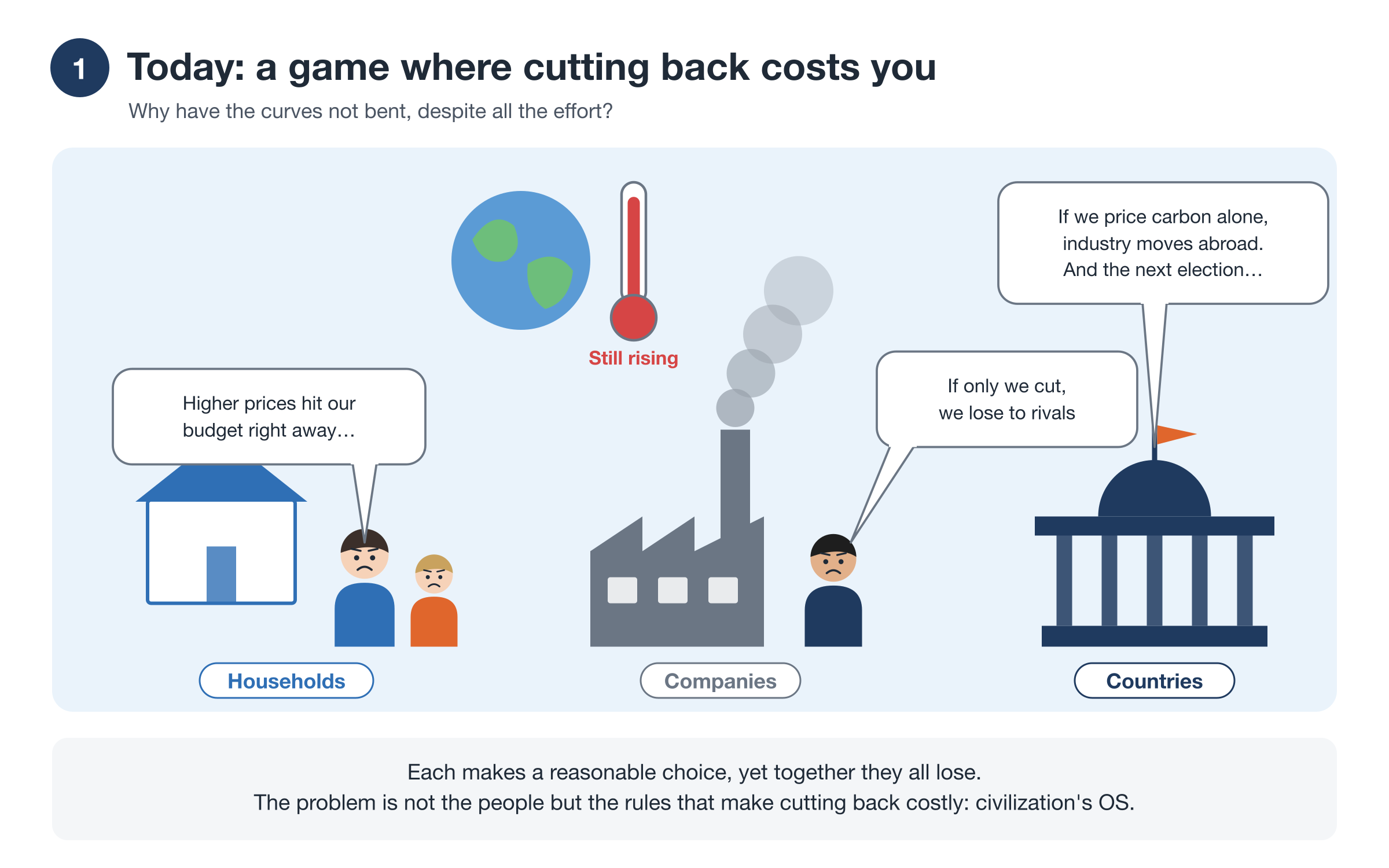
Households worry about prices, companies about rivals, and countries about losing industry and the next election. Each has a good reason, and whoever cuts back alone loses. So decades of effort have gone into a game that cannot be won. The problem is not the people but the rules.
2. New rules: the less you use, the better off you are
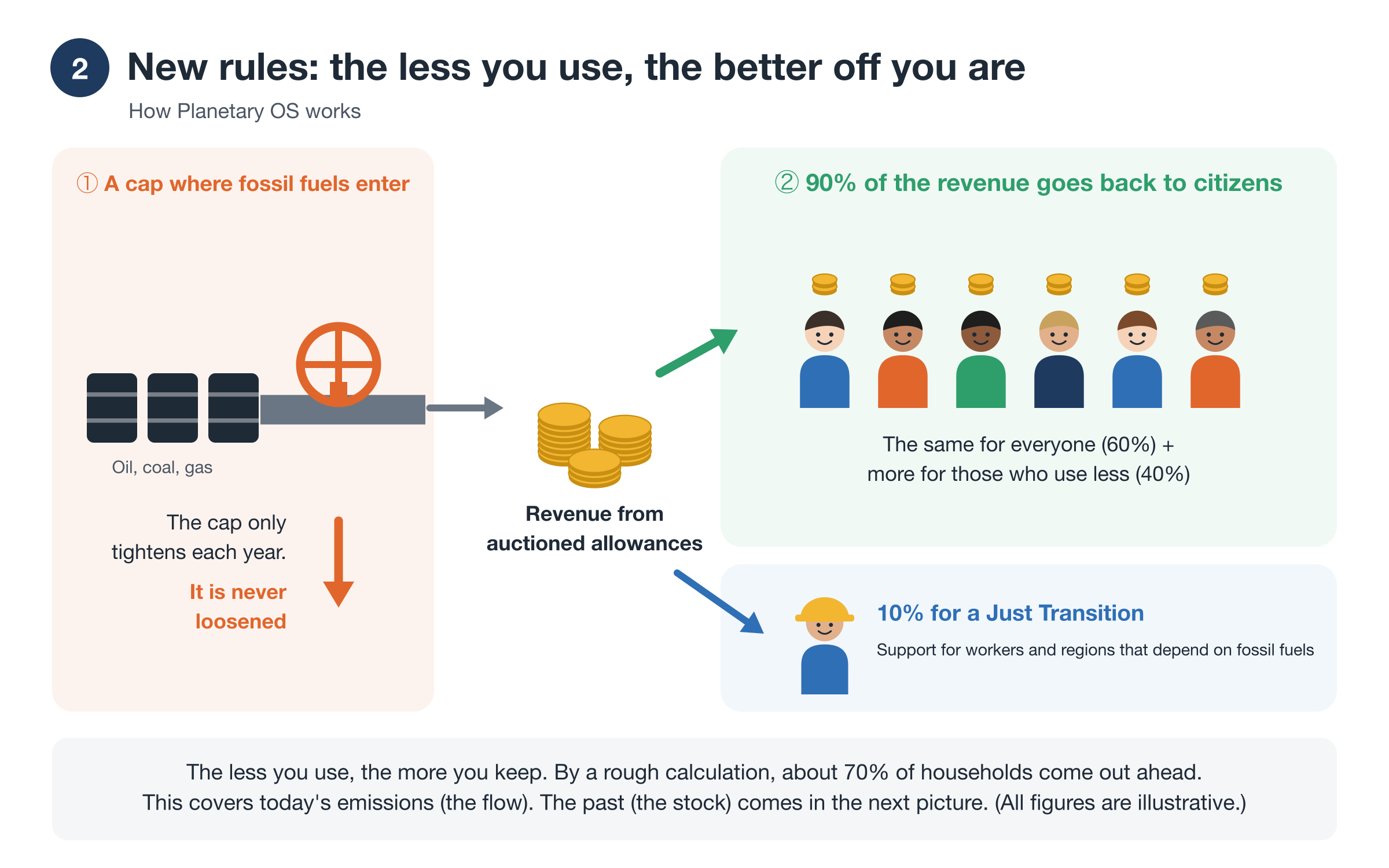
Planetary OS caps fossil fuels where they enter the economy and tightens the cap every year. Of the revenue from auctioning the allowances, 90% goes back to citizens as a Citizen Dividend and 10% to a Just Transition for workers and regions. The less you use, the more you keep.
3. Sharing the past too: the Endowment (PTE)
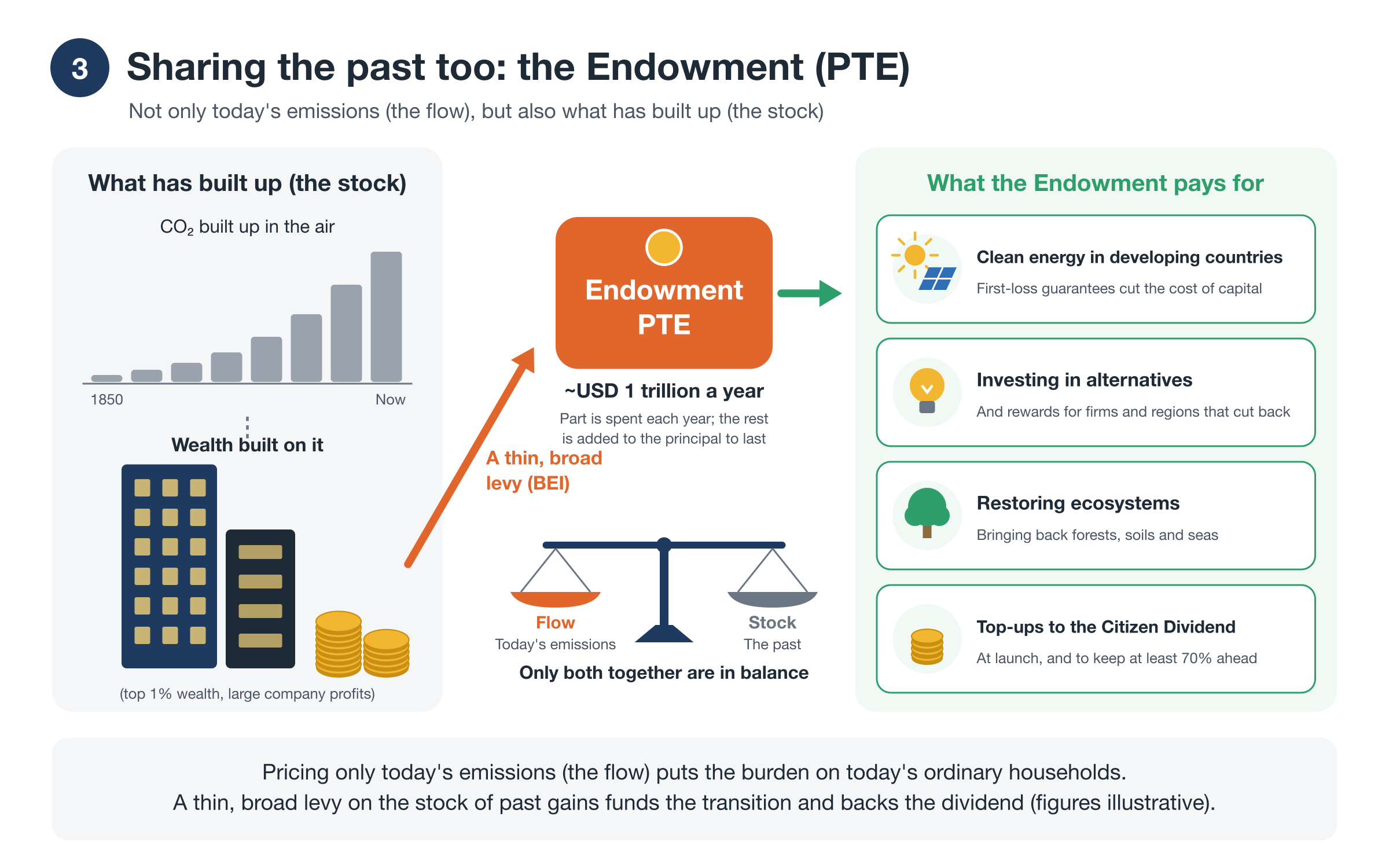
Pricing only today's emissions (the flow) puts the burden on today's households alone. So the large fortunes and corporate profits built on past emissions (the stock) also pay a thin, broad levy (BEI). It goes into a lasting fund, the PTE, on the order of USD 1 trillion a year in one estimate. The fund pays for clean energy in developing countries, ecosystem restoration, and top-ups to the dividend.
4. Protecting the rules: two keys
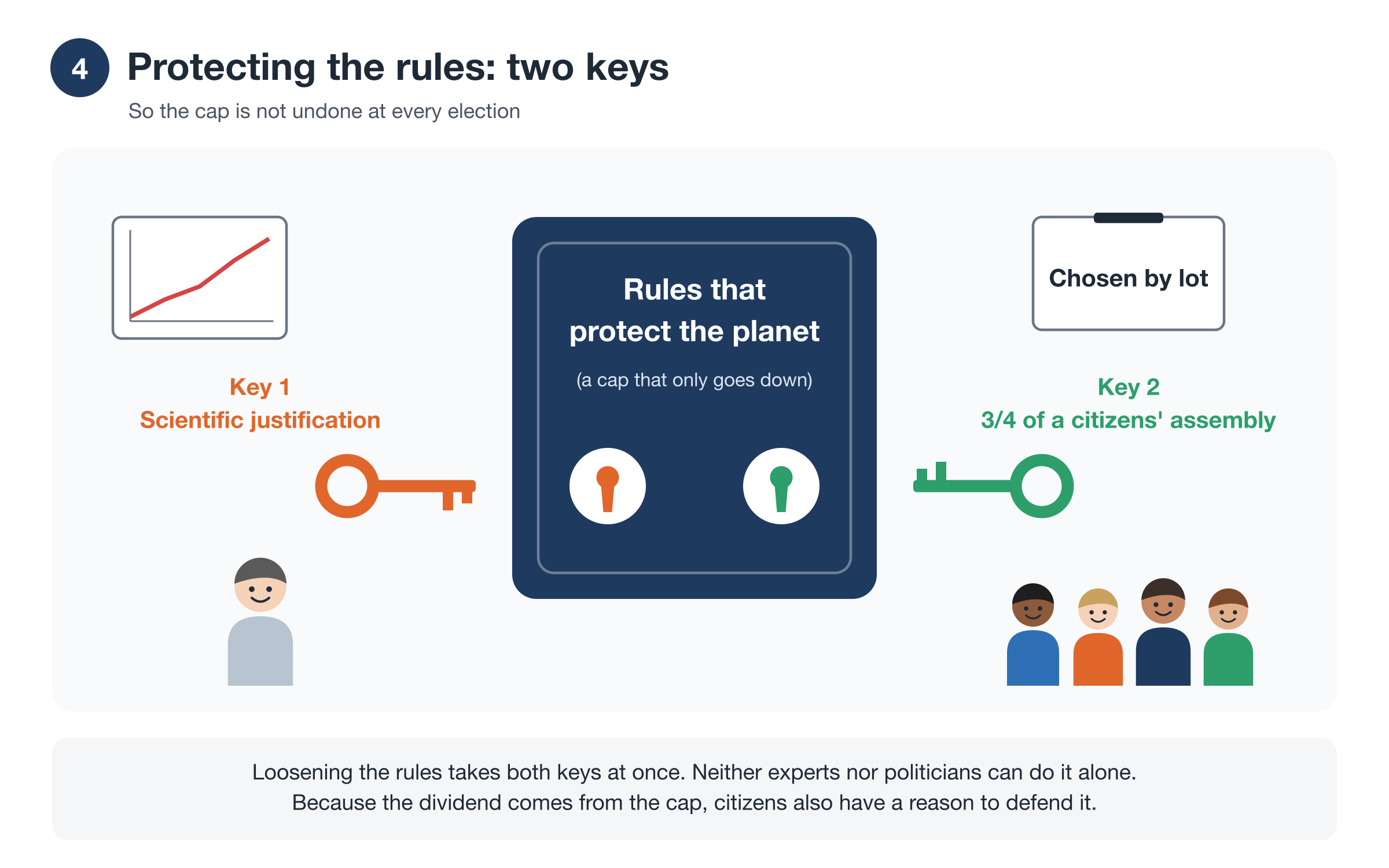
Loosening the rules takes two keys at once: scientific justification, and the approval of three-quarters of a citizens' assembly chosen by lot. Neither experts nor politicians can do it alone. Because the dividend comes from the cap, citizens also have a reason to defend it.
5. Who and how: from citizens' will to decisions
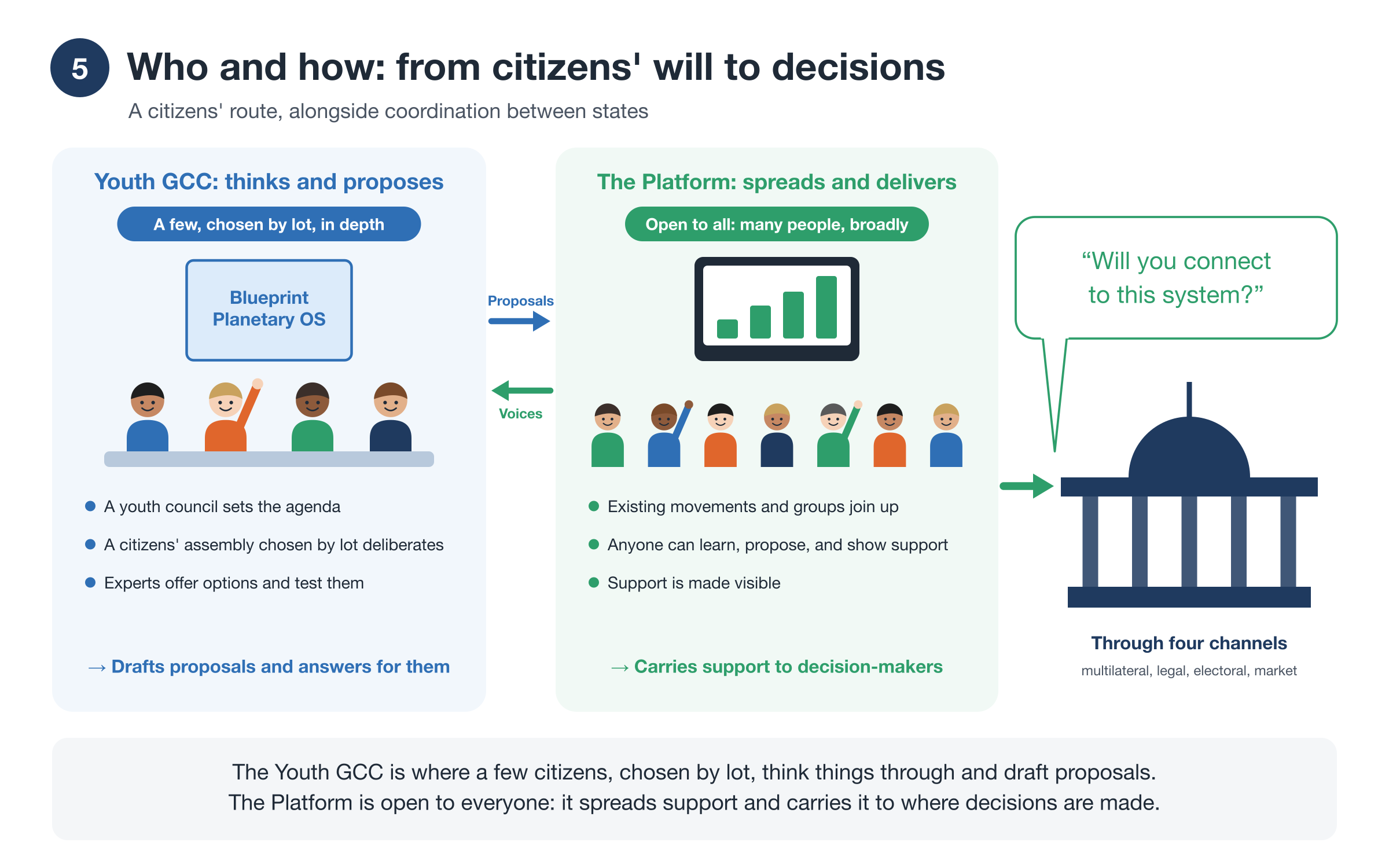
The problems cross borders, yet no one speaks for the whole planet and for future generations. So the package builds a citizens' route alongside coordination between states, complementing states and the UN rather than replacing them. The Youth GCC is the place to think, where citizens chosen by lot deliberate and draft proposals. The Platform is the channel to deliver: anyone can join, and it carries their support to decision-makers with one question, "Will you connect to this system?"
6. How it spreads: a club worth joining
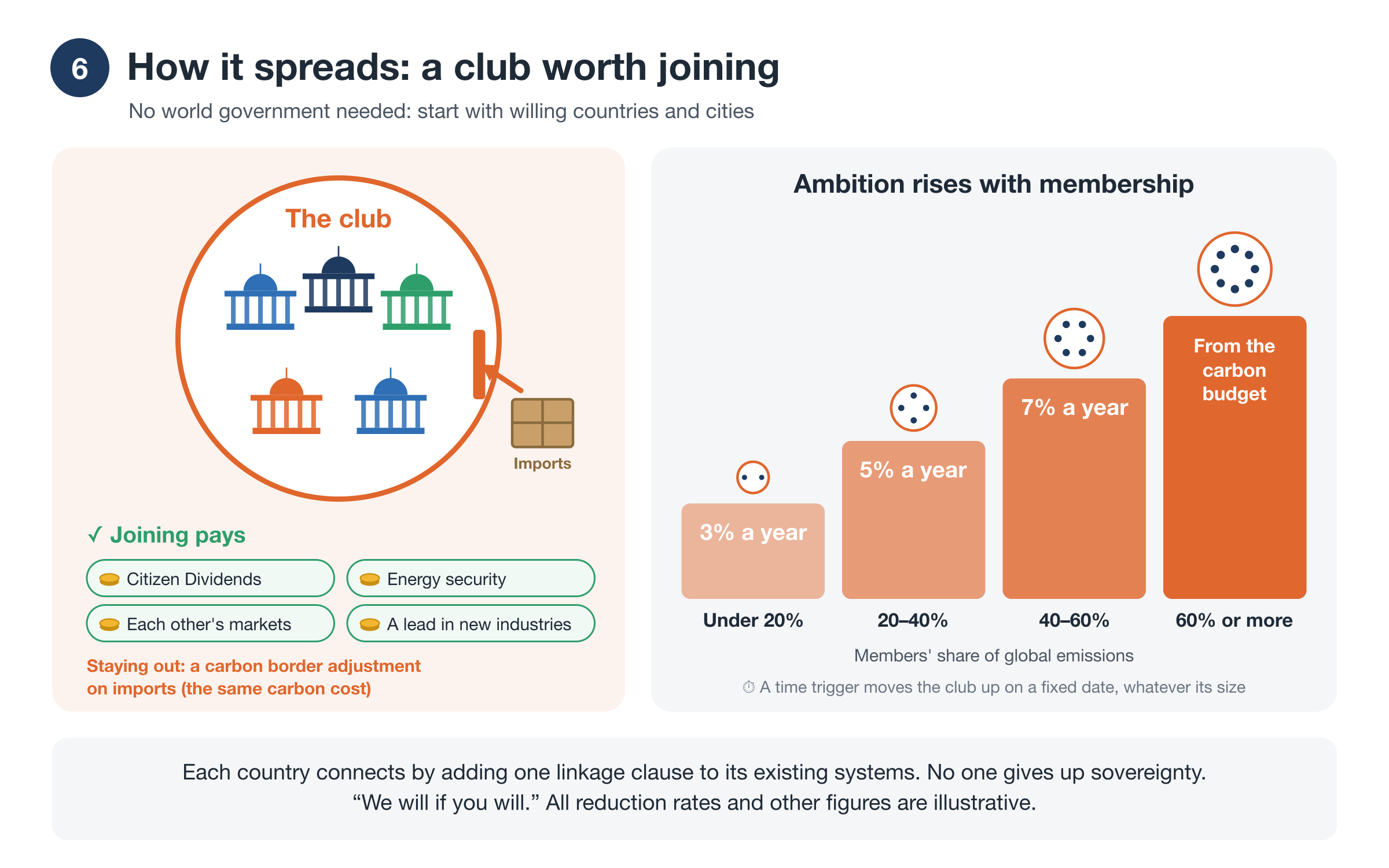
There is no world government. It starts with a club of willing countries and cities. Joining pays, with dividends for residents and more secure energy. Staying out means a carbon border adjustment on imports. The bigger the club, the higher its target.
What you can do
- Read the whole idea, with the reasoning →
- Check your own household in the simulator →
- Take part as a Co-Initiator →
Contact: Tatsuya Mori · Substack · note · X · Contact form
This document is also published on: note (Japanese)